
Work philosophy
The goal is not to transform, but to enhance. Skin with texture, hair that moves, and a bride who recognises herself in the mirror
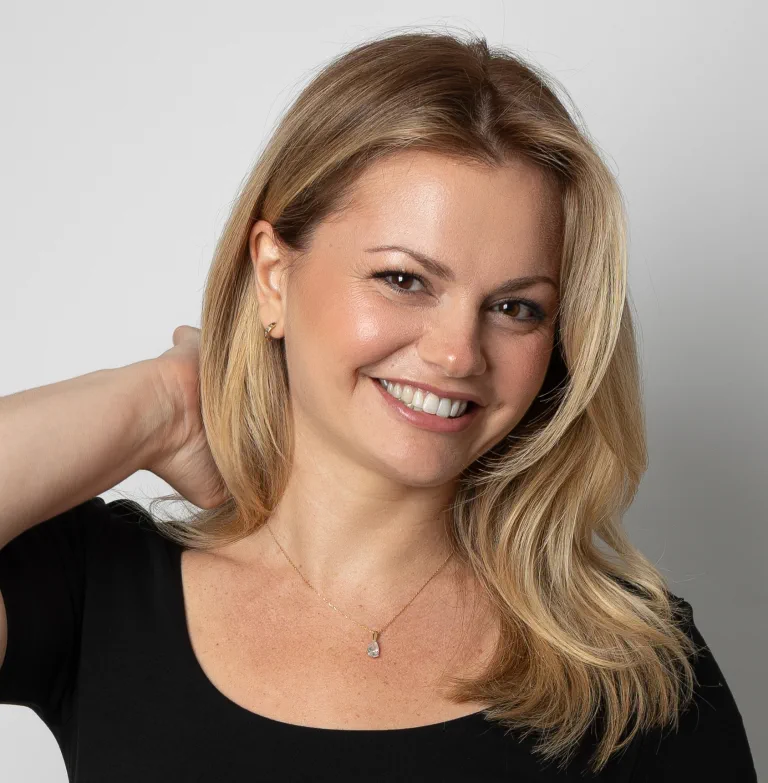
By Verónica L. Wallis
What makeup can cover, and what it can’t
When a bride sits down in my chair and asks me to cover a scar, a mole or an acne mark, the first thing I do is tell her honestly what will happen to that part of her face.
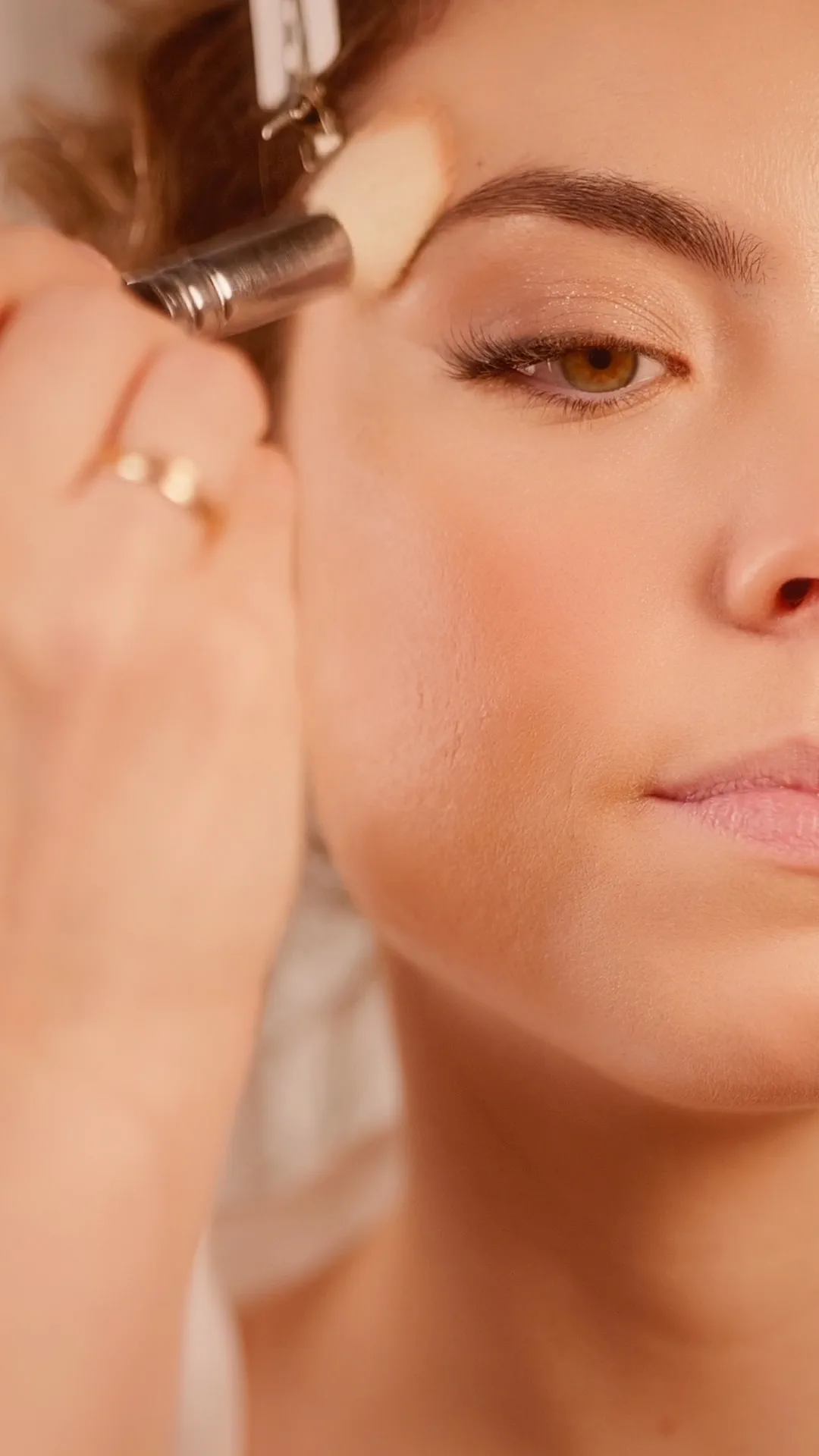
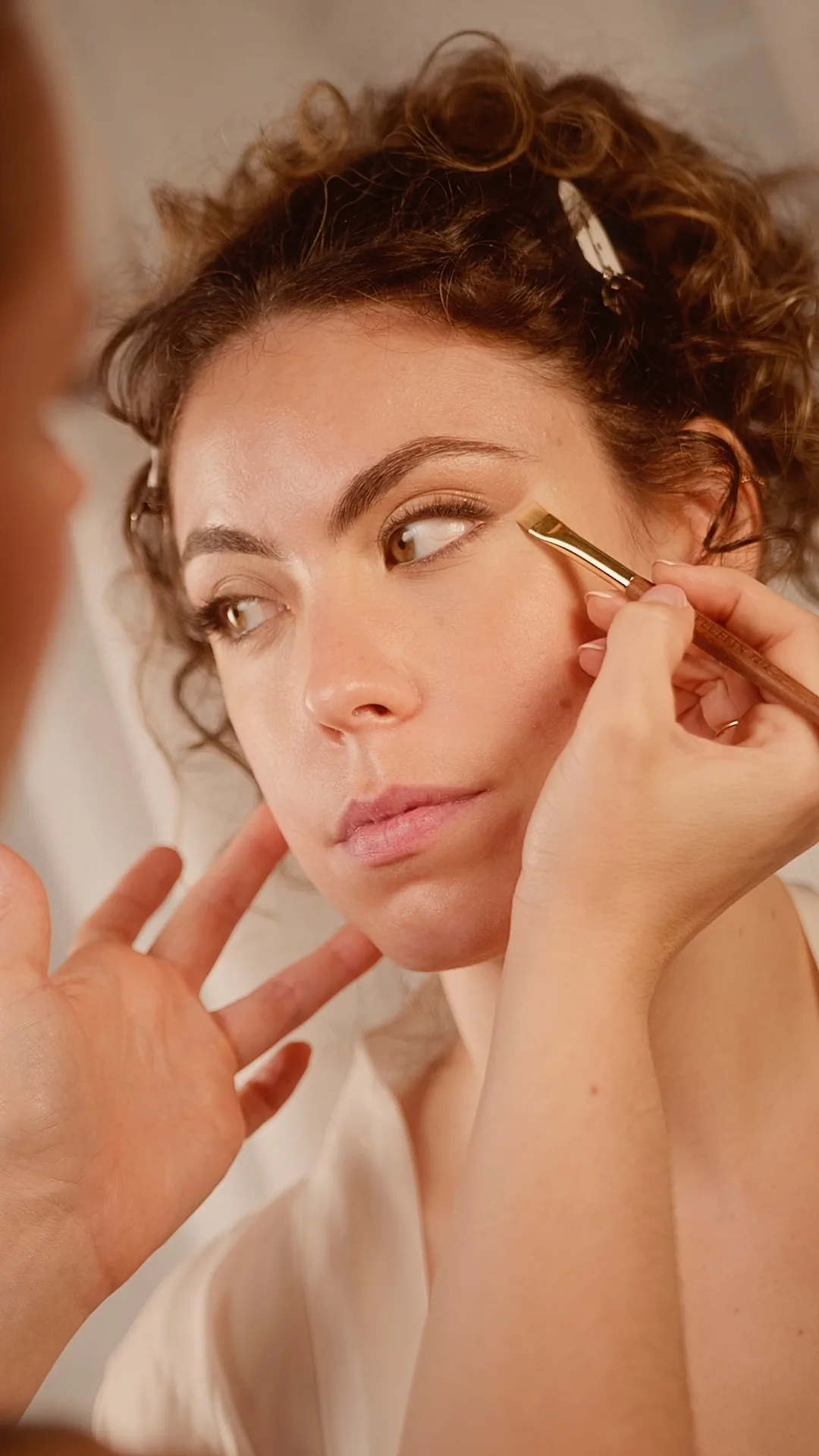
Makeup works with colour. It covers the mark in the same tone as the rest of the skin, and once everything is even, the mark stops drawing the eye. What it cannot change is texture. If the area is sunken or raised, it will stay that way, because no makeup product fills or smooths the skin.
I explain this plainly at the first trial, and most brides are relieved to hear it. A hollow under the eye, visible pores, an old scar: almost everyone has something like that, and it is perfectly fine. Skin has texture, and that texture is what makes a face look real, in person and in the photographs of the day.
Starting from what already suits each face, not from what she wants to hide
From there, I work the other way round from what most brides expect. Instead of starting with what the bride dislikes, I look at her whole face before I touch anything: where the light falls, the shape of her eyes, the colour of her hair, how her mouth moves when she speaks. Every face has two or three features that are flattering on their own, and my job is to make the most of them.
When the eyes are well defined, that is where everyone looks. Whatever was worrying her is still there, but it moves into the background. That is what I mean by enhancing rather than transforming: nothing needs erasing, it is only a matter of deciding what is seen first.
A photograph captures a single moment, and a wedding lasts all day. Makeup and hair designed for every one of those hours.
A face moves throughout the wedding, and the makeup is chosen with that in mind
There is something few brides ask for out loud, but almost all of them hope for: that nothing will move all day.
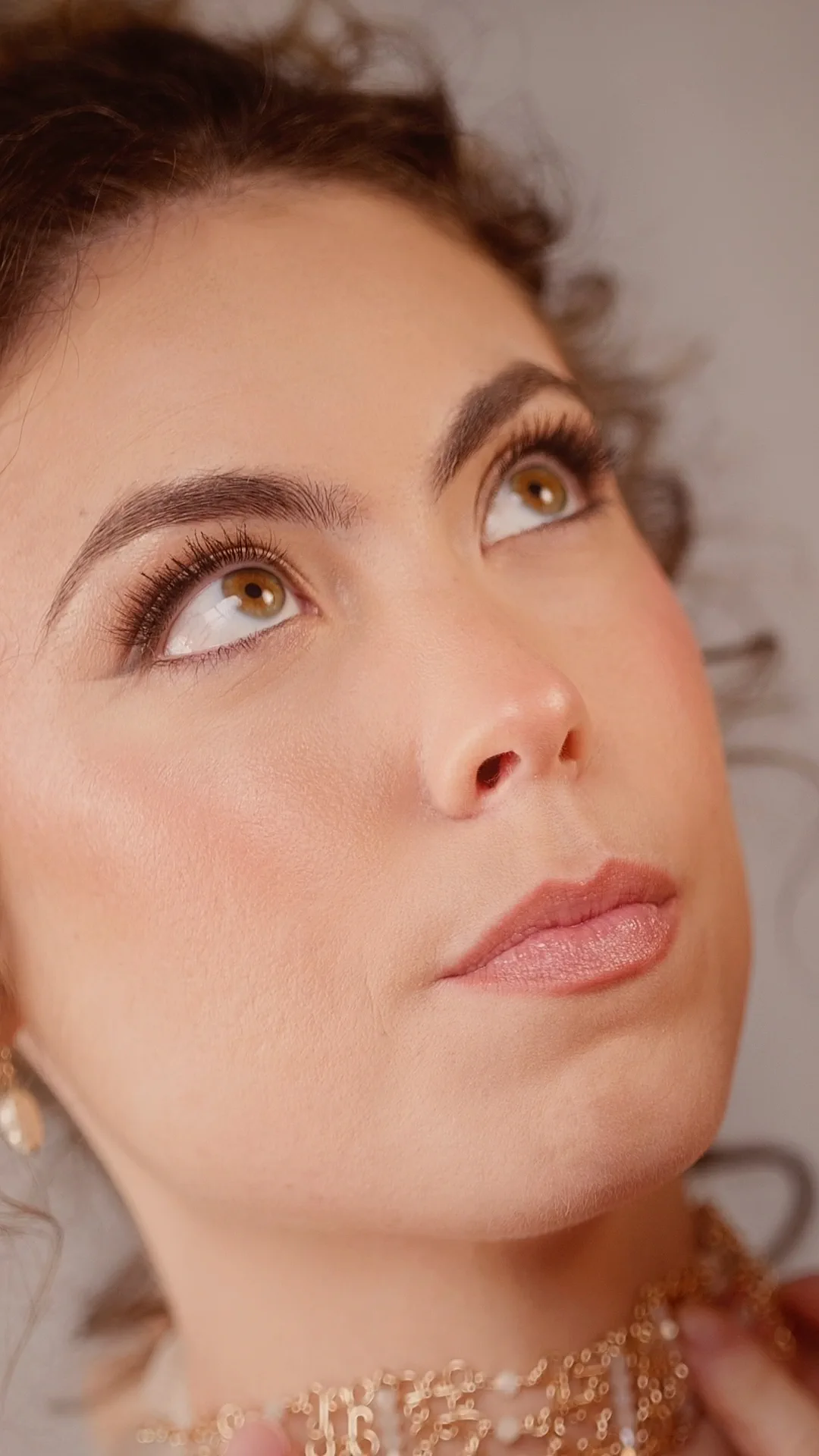
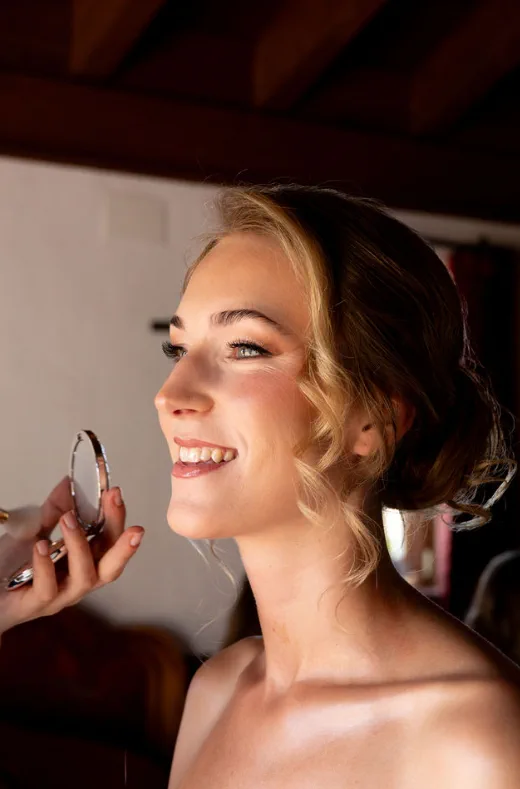
A bride smiles, and when she smiles the crease under her eye deepens a little. It is natural and it happens to everyone, because nothing about a living face is static. By late morning it shows more, after hours of laughing, being moved and hugging the people she loves. A photograph keeps one moment of all that, and the wedding carries on into the night.
So I choose products for all of those hours, not only for the morning photographs: for the heat, the tears at the ceremony, the kisses, the hugs and the dancing. What I want is a face that still looks as lovely at eleven at night as it did at the ceremony, even after she has cried, perspired and danced.
Hair moves throughout the wedding, too
Hair is the same story, although the request is different. Nobody asks me to take the texture out of their hair. What brides expect, usually without saying so, is an updo that looks exactly the same at nine in the evening as it did at nine in the morning.
Hair is hair. However much preparation goes underneath and however much hold I give it, a wedding brings wind, people hugging the bride, hands touching her hair for photographs, dancing and jumping. Something is going to move. Some of the hairstyle photographs on social media were taken the moment the style was finished, or retouched afterwards, and they show a frozen moment as if it lasted all day.
So I choose the shape of the hairstyle knowing it will move. The Costa del Sol has heat, humidity and sea breeze for most of the year, and an updo has to be designed for that from the start. What I look for is a hairstyle that is still the same in the last photograph of the night: a little softer, with the same recognisable shape.
Nobody looks like a filter, not even the woman in the photograph. A bride who looks at herself again, not at a retouched image.
Why no real bride looks like the photographs on social media
Many brides come to their first trial with a photograph saved on their phone, and show it to me right at the start. It is usually another bride, taken from the account of someone in the industry, and on some occasions it has been retouched: the skin has no pores, there is not a single mark, and the updo has not one hair out of place.
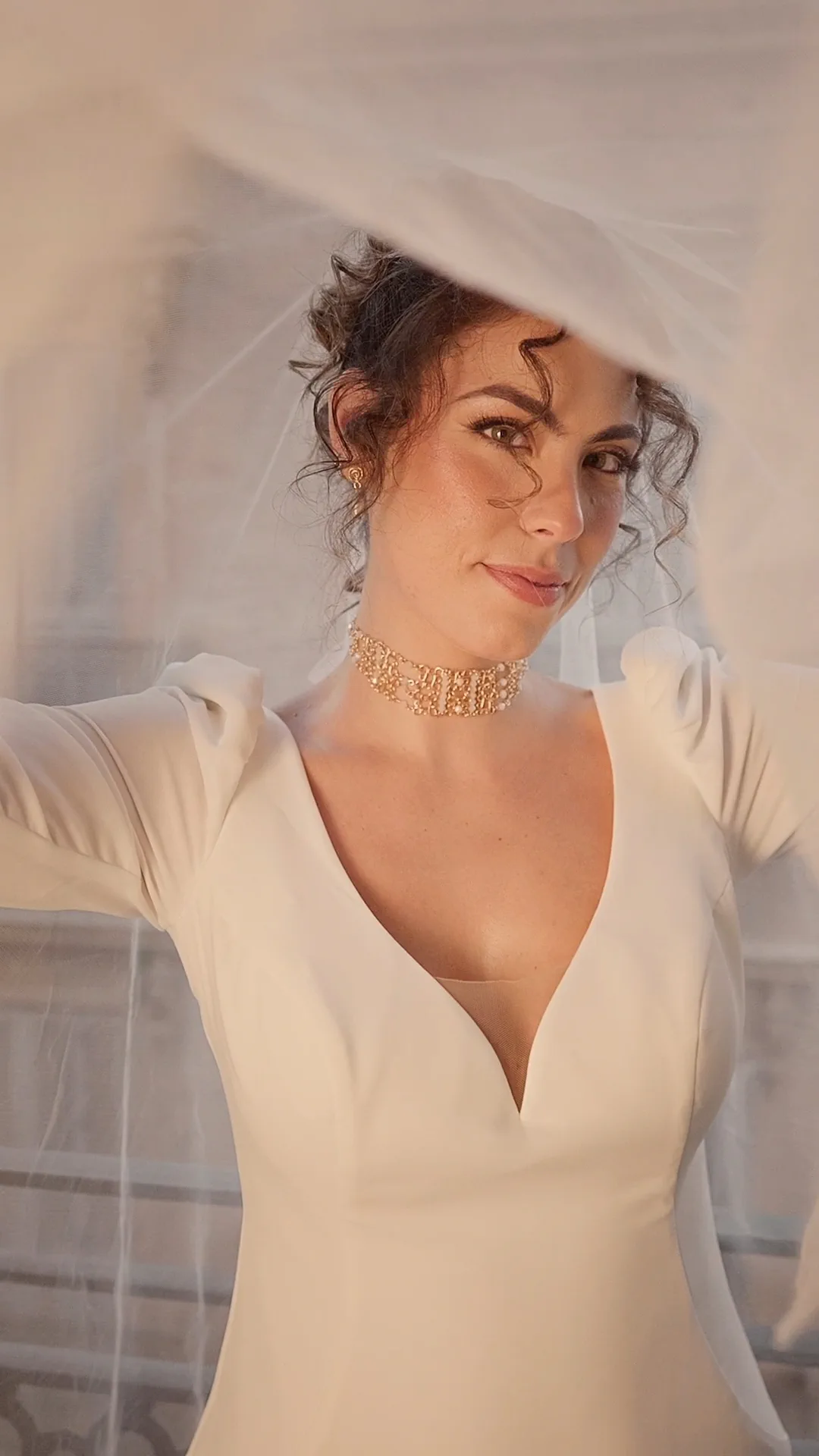
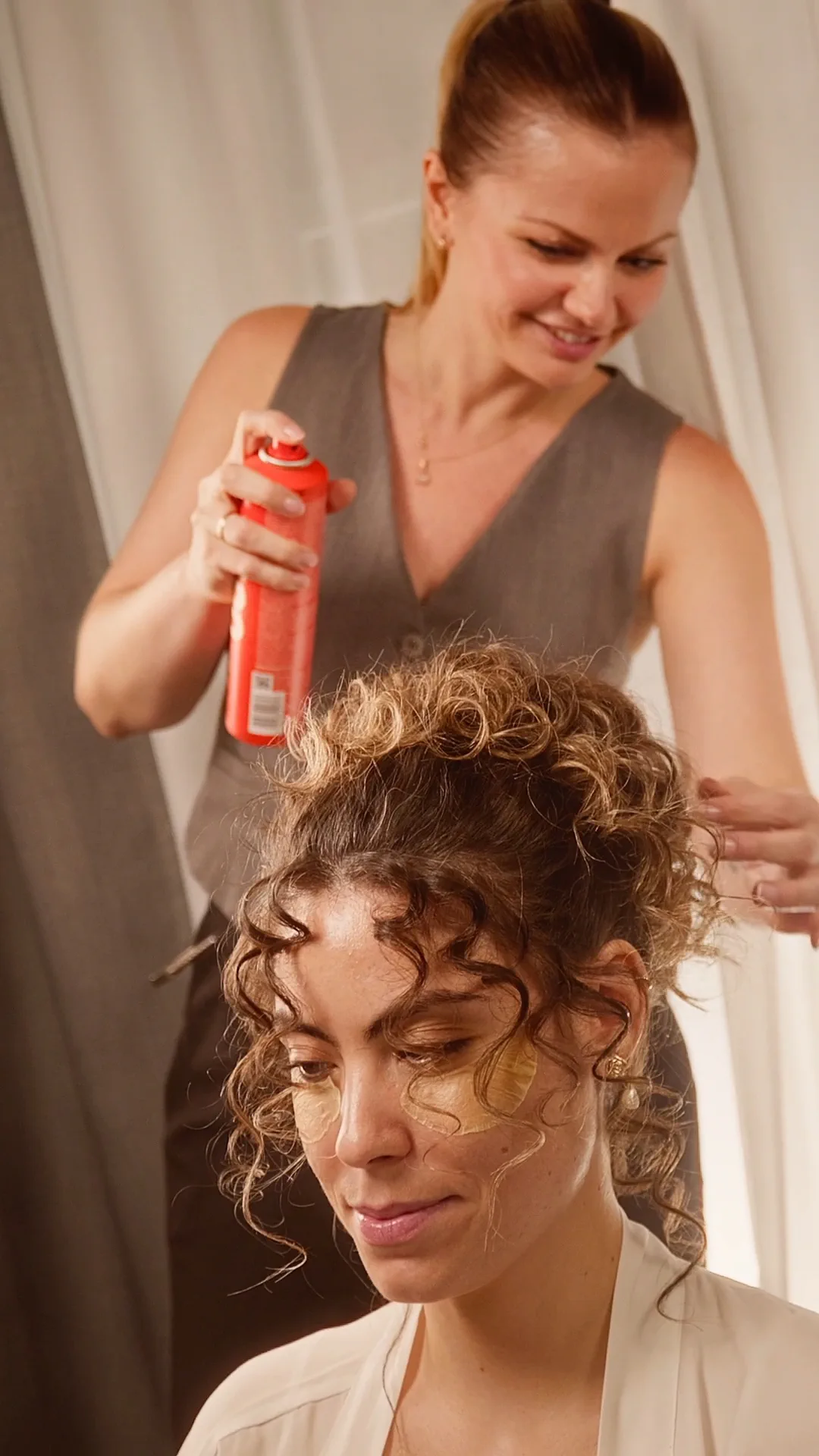
Some professionals misuse editing, although not all of them do. They retouch photographs until every trace of skin texture is gone, and it works, because those images bring in more bookings. The problem comes later, at the trial. The bride looks in the mirror, does not see what she saw in that photograph, and thinks the quality has dropped. It has not: the photograph was showing skin that does not exist.
More recently, some of those images are not even of a real person. They are generated by artificial intelligence and sit alongside real photographs, with nothing to tell them apart. That skin has no texture because it belongs to no one.
What I see in my chair is the result. A bride who compares herself with those images does not think they have been edited. She thinks the other brides are more beautiful than she is, and arrives convinced that she is the ugly one. For a bride planning her wedding from abroad this weighs even more, because photographs are often all she has to judge by before she meets anyone. That idea reaches the trial long before any question about foundation or updos.
Much of the work is done by talking with the bride
That is why a good part of my work has nothing to do with products. There are trials where I spend more time talking than doing makeup, and that time is never wasted, because it is exactly what that bride needs.
In that conversation I show her what she already has and why it suits her, and little by little the photograph she has been comparing herself with loses its weight. I do not try to convince her of anything. I simply stop looking at her face as a list of things to correct, and at some point she begins to see herself the way I see her. What changes there is how she sees herself: valuing herself as she is and making the most of what she has, instead of trying to erase what is there.
Once that happens, everything else becomes much simpler. And on the wedding day you can see the difference between a bride who has had her makeup done and a bride who also likes what she sees.
A few years ago I had a bride in front of me who was about to cancel her wedding. She wanted to swap it for a short ceremony at the registry office, with no guests and no celebration, because she was convinced she would never measure up to what she saw on social media. The whole trial went on that, with her bad moments. She ended up looking at herself and liking what she saw, and crying with joy. She had always been beautiful. What was failing her was the mirror she was measuring herself against.
In the end, what I want is something very simple: that on her wedding day the bride looks in the mirror before she leaves and finds herself there, with the light where it flatters her and a hairstyle that holds. And that in the photographs from the night, after hours of hugs and dancing, she is still herself.
Verónica L. Wallis
Contact
- Phone
- WhatsApp Message on WhatsApp
- Instagram @wallisbridal
Makeup and hair are never planned apart: they are built together so the same face holds from the ceremony to the last dance.