Frequently asked questions

The questions nearly every bride asks before her wedding, with a short answer and, when a question deserves it, a full explanation.

All questions

Booking, price and terms

Price, booking the date, payment and what the service includes.

What does the wedding hair and makeup package include?

The service includes the trial and advice throughout the year, right up to the wedding day. For makeup, it also includes a touch-up kit in the shades chosen at the trial, handed to you on the wedding day: your lip colour, blush, setting powder, blotting papers, a mirror and a small pouch to take your makeup off at the end of the night.

Which areas of Andalusia do you travel to for weddings?

Weddings are covered throughout Andalusia, from a base in Fuengirola. Up to an hour and a half by car, travel is done on the day; between an hour and a half and two and a half hours, a night in the area is weighed, and further away it is always part of the plan, included in the quote.

How much does wedding hair and makeup cost in Spain?

There is no single price, because every wedding has its own quote. The bridal rate includes the trial, the makeup touch-up kit and online advice. Depending on the wedding, it is joined by the people getting ready besides the bride, the travel fee, accommodation and meals when the wedding is far away, and a small surcharge for a very early start. Every price is in the dossier, which you receive when you ask about your date, through the contact form or any other channel, along with answers to all your questions.

Does the wedding hair and makeup trial cost extra?

No. The bridal trial is always included in the bridal rate, which is sent with the dossier. A trial for a godmother or a guest is not included: it is quoted separately, at the same price as the service itself.

Do you have to feed the hair and makeup artist at a wedding?

Only when the team stays for the celebration. At a large wedding, if the makeup artist, or part of the team, is booked to stay all night for touch-ups or a second look, they become part of the wedding staff and need a meal, like the other wedding vendors.

How do you pay for wedding hair and makeup?

The bridal service is paid in three parts: a 5% deposit when the contract is signed, 45% on the day of the trial and the remaining 50% on the wedding day. Guests and family pay in full on the wedding day. At a destination wedding, flights, hotel and meals are paid in advance, with the deposit, because the bookings are made with that money.

Is the wedding hair and makeup deposit refundable?

If the wedding is cancelled, the deposit is not refunded, except for serious reasons such as a death, a serious accident or force majeure. If the date changes, the deposit carries over to the new date, as long as it is free. If it is not, the deposit is not refunded.

What if the ceremony time or wedding date changes?

If the ceremony time or the wedding date changes at the last minute, everything possible is always done to keep the service and find the best solution. However, as the contract is signed for a specific day and time, it cannot be guaranteed: it will depend on the team's availability at the new time.

Makeup

Skin types, tattoos, tears and heat: how the makeup adapts to each bride.

Will waterproof wedding makeup last all day in hot weather?

Makeup and hair are designed to last the whole day, because skin and hair are prepared specifically for the conditions of each area: mainly the heat inland, and the heat as well as the humidity on the coast. No makeup or hairstyle is infallible, but with this preparation it lasts far longer than a conventional service.

What are the best makeup brands and products for brides?

The makeup and hair kit is multi-brand, because the best available product is chosen for each type, always from luxury houses. For makeup, that means brands such as Chanel, Dior, Yves Saint Laurent, Guerlain, Nars, Charlotte Tilbury and Hourglass, and for hair, Kérastase, Redken, GHD and OSiS. The bride does not need to bring any products.

Is there cry-proof makeup for your wedding day?

Not entirely, but very nearly. The skin is thoroughly prepared and every product used is waterproof, with sealing and setting designed precisely for these moments. Even so, it is worth knowing that waterproof makeup is not entirely tear-proof, because tears contain sodium as well as water; that is why nobody can guarantee it will hold absolutely, even though its resistance is very high.

What is the best wedding makeup for oily or acne-prone skin?

For skin prone to acne or oiliness, the best choice is oil-free makeup with a matte or powdered finish. Throughout the day, setting powder and blotting papers help keep shine under control, so the skin looks cared for all through the celebration.

How to cover tattoos with makeup for a wedding?

A tattoo can be covered with makeup using a technique of fine layers of product built up one over another. Depending on the type of tattoo, the work can be very complex, and it is worth knowing that the coverage cannot always be guaranteed to stay intact all day, as hugs and contact gradually soften it over the hours.

Natural or full glam wedding makeup: what is the difference?

The difference lies in how defined the lines are and how intense the makeup is. In full glam makeup, the lines are very graphic and everything is defined and structured, so the intention behind every stroke shows. Natural makeup, on the other hand, aims for a result that looks like your own skin, only slightly enhanced.

How to choose the right foundation shade for your wedding?

The foundation shade is chosen on the lightest part of the face, usually the lower cheek, near the jaw. It is normal for other areas, such as the forehead or cheekbones, to be slightly more tanned; those differences are corrected afterwards with bronzer, blush and layers of powder, until the result is as close as possible to your natural skin. What is never done is to start from a foundation darker than your own skin.

What wedding makeup to use with sensitive skin or allergies?

The contract includes an annex where you declare any allergies and intolerances, and it is very important to fill it in in detail. With that information the kit is checked product by product and the one best suited to your skin type is prepared; for very reactive or allergic skin, Sensilis is used. As long as everything is declared, the makeup is completely safe.

Is cream or powder makeup better for hot weather?

In theory, powder holds up better in the heat, but in practice what works best is combining the two. A cream base melts into the skin and leaves a very natural texture. It is then set with powder, which takes away shine and controls oil throughout the celebration.

Should I cover my tattoo on my wedding day?

There is no need. The recommendation is to leave it on show, because it is part of who you are, and wearing it on your wedding day is one more way of being yourself. If you would still rather cover it, that is possible too, with a makeup technique designed for it.

How to cover acne scars with makeup for your wedding day?

To cover acne scars with makeup, correctors first neutralise the colour of each mark. The base goes on top, and the whole look is set at the end. Every product is chosen to be as oil-free as possible, so as not to feed the acne.

How should a bride or her mother wear makeup with glasses?

The makeup is practically the same, with special care in setting the nose so the nose pads of the glasses do not spoil it. Even so, glasses shift it a little over the hours, so it is worth touching it up now and then with the mattifying powder from the touch-up kit.

Do makeup artists use the same lipstick on every bride?

Yes, and sharing a lipstick is hygienic as long as it never touches anyone's lips. The colour is taken out with a disposable applicator, placed on a stainless-steel palette and applied from there. When the makeup is finished, the applicator is thrown away.

How can I tell if my wedding makeup artist is hygienic?

You can check a makeup artist's hygiene at the trial by watching four things: whether your skin is cleaned before anything starts, whether mascara and lipstick go on with disposable tools, whether the sponges and powder puffs are new, and whether the brushes are clean, with no traces of someone else's makeup.

Hair and veil

Updos, curly or fine hair, extensions and how the veil is placed.

How does beach wedding hair hold up on a windy day?

The updo is prepared to withstand the conditions of a beach wedding: salt water, humidity, heat and wind. Even so, hair always moves a little in those conditions, and that is worth expecting. A well-built hairstyle moves with it and stays beautiful throughout the celebration, evolving naturally over the day.

How to secure a wedding veil with or without a comb?

It depends on the type of veil. Veils with a comb are the simplest to place, because the comb only needs fixing into the hairstyle, and some models come with a clip, although these are less and less common. Veils that come with no fitting at all, just the fabric, are sewn into the hair with pins using the classic technique, and mastering it is essential so the veil does not fall.

Can you have a wedding hairstyle with short hair?

Yes, a wedding hairstyle can be done on short hair too, always adapted to its length and to how it is cut.

What if I have thin hair with little volume for my wedding?

A wedding hairstyle is also possible with fine or low-volume hair, although its limits are worth bearing in mind: the result will most likely be smaller and less voluminous than many Pinterest references. All of this is explained clearly from the start and, if you would like more volume, clip-in extensions can always be added as filler.

When to wear the second wedding dress?

It depends a great deal on the kind of wedding. At a standard or smaller wedding it is not usually worth it, but at a large-scale or celebrity wedding it is a wonderful idea. These celebrations are longer, with different settings and a fuller photography and video team, and the move from ceremony and drinks reception to the party, with a second dress and a new hairstyle and makeup, becomes a grand entrance that looks beautiful in the photographs.

How do you attach a wedding veil with your hair down?

Inside the hairstyle, where it cannot be seen, a small structure is created, such as a hidden braid or some backcombing, to act as a base. The veil's comb is pushed into that structure, so the veil stays secure even with the hair worn down.

Should I get hair extensions for my wedding updo?

Only when the hairstyle needs extra volume, and ideally clip-ins, which go in and come out the same day. If you already wear permanent extensions, they need to be placed very well so they neither get in the way of the hairstyle nor show. They are checked at the trial and, if they are not placed well, ideally your own stylist repositions them so they are as hidden as possible.

When does the bride take off her veil?

Usually between the ceremony and the drinks reception. Straight after the ceremony there are often photos where the veil still looks wonderful, and after that it can come off so the rest of the celebration can be enjoyed more freely.

How to keep curly wedding hair from frizzing in humidity?

Almost always, by styling it with your natural curl. Straightened curly hair tends to go back to its shape, and in humid weather it gets frizzy far more easily. Straightening only makes sense if you do not feel comfortable with your curls.

Is an updo or half up half down better for curly hair?

Both work, built on your own curls. An updo holds better and keeps a stronger shape, so it is usually the one recommended, but a half-up style adapts to curly hair just as well. The choice is yours.

Pre-wedding care

Skin and hair in the weeks before: treatments, cut, colour and the night before.

What skincare routine should I follow before the wedding?

In the weeks before the wedding, it is best to keep to the skincare routine you already follow, without introducing new products or having abrasive treatments or invasive procedures. If you have no routine, you can start one, but at least six months ahead, to rule out any allergy or reaction in good time. A routine with hyaluronic acid and vitamin C helps makeup look much brighter and fresher.

How should I care for my hair before the wedding?

In the weeks before the wedding it is best to avoid major changes, especially chemical treatments such as straightening or harsh highlights. A light trim of the ends and a hydrating treatment are a good idea, always gentle and aimed only at caring for the hair, so it reaches the wedding in its best condition.

When should I get a haircut before my wedding?

A small trim one or two months before the wedding is a good idea, as long as it is not overdone, so nothing decided at the trial changes.

How to prep your skin the night before the wedding?

The best thing is to keep to your usual routine and try nothing new that night. At most, a vitamin C mask or another equally gentle one, for a little more radiance. On the wedding morning, the skin also gets vitamin C masks or patches, and decongesting patches for the under-eyes.

When should I have a facial or peel before my wedding?

Ideally between three weeks and a month before the wedding. Any closer is not advisable, because spots can come out after a facial or a peel, and the skin needs time to settle before the big day.

Should I wash my hair the day before my wedding?

In most cases, the best time is the night before. There are two exceptions: very fine, very oily hair, which is best washed that same morning so it is as fresh as possible, and blow-dried styles, which are also done on hair washed that morning. Freshly washed hair is not a problem, because texturising products now give it the grip a hairstyle needs.

When should I dye my hair before my wedding?

If you colour your hair regularly, the best time is the week of the wedding, just as in any other month, so the roots do not show. It is not the time to change colour, though.

The trial

When it takes place, how long it lasts, what to bring and what happens if the result does not convince.

What happens at the wedding hair and makeup trial?

At the trial, the makeup and hairstyle you have in mind are built step by step. Very often the result is right the first time, and when there are doubts or the idea is not yet clear, the proposal is adjusted as many times as needed, until you feel completely comfortable with it.

How long does a wedding hair and makeup trial take?

It depends on how clear your idea is. When you know what you want and the first proposal works, an hour and a half to two hours is usually enough. When several options need trying and changing, the trial can run to three hours, or even four if it has to start again from scratch.

Is a wedding hair and makeup trial necessary and worth it?

The trial is a very important part of the process, and it almost always takes place. It is not only for you to agree with what will be done: it is also how your skin and hair are understood, which makes it possible to refine the wedding-day result a great deal. It is only skipped when it cannot be arranged, for example if you live far away and arrive on a Monday to marry on the Tuesday.

What if I don't like my wedding hair and makeup trial?

During the trial itself, the proposal is adjusted until you feel at ease, and so far no bride has ever left without a result she liked. If you are still not convinced, the trial can be repeated on another day, and whether that carries an extra cost depends on the circumstances.

What should I wear to my wedding hair and makeup trial?

Ideally, wear white to your trial. It is not compulsory, but it helps a great deal: you see the makeup and the hair against tones close to those of your wedding day, and it is much easier to picture the whole look with the dress.

How should I prepare for the wedding hair and makeup trial?

Ideally, you come to the trial with clean, dry skin and hair, without creams, serum or oils. Skin preparation is part of the trial itself, which prevents two products with incompatible formulas from interfering with the result. The only exception is a blow-dried finish: in that case, it is best to arrive with freshly washed hair that is still damp. Bring a photo of the dress too, which is essential, along with the headpiece, the veil and any accessory you want to see yourself with, even your earrings, so the hairstyle can be seen with them on.

When should I have my wedding hair and makeup trial?

The trial usually takes place one to two months before the wedding, when hair length and tan are closest to how they will be on the day. If you are planning your wedding from abroad, the date is fitted around your trips to Spain with complete flexibility, and it is often scheduled alongside other appointments, such as the menu tasting.

How do I bring my Pinterest inspiration to the trial?

You can bring your references on the day of the trial, although ideally you share them throughout the year by email or WhatsApp. That leaves time to get to know your style and what you hope for on the day, so the trial starts from a clear idea that is then refined.

Will my wedding hair and makeup look the same as the trial?

Wedding-day hair and makeup reproduce what was decided at the trial, which exists precisely for that. Photographs are taken during the trial to remember and review the finish, and they sometimes reveal small details that can be improved. Those adjustments are made on the wedding day, once your skin and hair are well known, so the final result is often even better.

The wedding day

Timings, the order of preparation, the room and coordination with the other suppliers.

How does destination wedding hair and makeup work?

Brides planning a destination wedding from abroad are the majority of clients: around eighty per cent of weddings are destination weddings, couples who live outside Spain and choose the Costa del Sol to marry. Everything, from the first references to the trial, is arranged flexibly around your trips to Spain.

When should I book wedding hair and makeup?

It depends on the season. For weddings in May, June, September or October, booking a year ahead is recommended, and at least eight months; for the rest of the year, four to six months is usually enough. In any case, a date is only secured once the booking is confirmed.

What is in a bridal makeup touch-up kit?

The touch-up kit carries the same products used for your wedding makeup: whatever was chosen for your lips, a sample of your blush and of your setting powder, each in its own jar with a puff, blotting papers and a small mirror. It also includes a hygiene pouch for taking your makeup off once the wedding is over, and a few hairpins for your hair. It is handed to you on the wedding day and is included in the bridal service.

How many hair and makeup artists does a wedding need?

As a guide, one team professional is recommended for every three guests who want hair and makeup. For example, for a bride, her mother and six guests, Verónica looks after the bride and her mother, and two more professionals take care of the rest of the group.

How long does wedding hair and makeup take?

Each guest needs around an hour and forty minutes for wedding hair and makeup, and you about two hours and twenty minutes, plus about ten minutes to place your veil. On top of that there is always half an hour before starting to set up the equipment, and some time at the end in case you want photos. With these figures and the number of people, the start time is worked out backwards from the ceremony.

Do makeup artists stay at the wedding for touch-ups?

It is possible, and a very popular service, although it is always quoted separately. It is booked both for touch-ups throughout the day, which is common at celebrity weddings, and to create a second look for the party.

When does a wedding need a hair and makeup team?

For large-scale weddings, celebrity weddings and weddings with very high expectations, a hair and makeup team is recommended. Sharing the work among several people makes the preparation far more efficient and keeps timings from stretching. That way, the wedding morning can start at a reasonable hour, with no need for an unusually early start.

Should the bride go first or last for hair and makeup?

Usually the bridal party is prepared first and you take the last or second-to-last slot. That way, when the photographer arrives, normally towards the end of the morning, you are having your final touches and can have those getting-ready photos brides so often treasure. You also arrive at the ceremony with your hair and makeup at their very best. Even so, the order is always flexible: if you feel nervous about going last, the slots are happily adjusted so you can start earlier.

Should the bride do hair or makeup first on her wedding day?

When the same person does both, the usual order is hair first and makeup last. That way the hairspray, wax and other hair products never land on a face that is already made up. When the work is shared with another professional who prefers the opposite order, it is arranged in whatever way works best for both.

What time should the bride start getting ready?

The start time is worked out backwards from the time of the ceremony. It adds up the time each person getting ready needs, half an hour beforehand to set up the equipment, and a margin at the end for photos with your family and bridesmaids. That is why there is no fixed time: the more people getting ready, the earlier the morning starts. With these margins, you reach the ceremony calmly and without rushing.

What does the team need in the getting-ready room?

A table as large as possible to lay out the equipment and a nearby socket are enough, although the team brings its own extension cables. Good natural light in the room is a bonus, but not essential, as the team also brings its own lighting.

What order should I book my wedding suppliers in?

The first step is usually securing the ceremony date, with the church or temple for a religious wedding, or with the venue for a civil or symbolic one. The reception venue comes next and, usually, the wedding planner too, whether the venue's own or an independent one. Photography and video follow, and hair and makeup come straight after.

How to plan bride getting-ready photos with hair and makeup?

When the contract is signed, you are asked for your list of suppliers and, above all, your photographer's contact details. That makes it possible to coordinate timings so the photographer is there during the preparation to take the getting-ready photos. If you have planned a second look, the photographer is also told what time you will be ready for your entrance, so that moment is well captured.

What to wear for hair and makeup for a wedding?

It is best to wear clothes that are easy to take off, that unbutton or can be stepped out of, so neither your makeup nor your hair is spoiled when you change. Tight garments that have to come off over the head are best avoided.

Mother, godmother, bridesmaids and guests

Who else can get ready with the bride and how it is booked.

Who pays for the family's and bridesmaids' hair and makeup?

It is a very personal decision, and it is yours. Sometimes you wish to treat your family and friends, sometimes a relative gives it to you as a gift, and sometimes each person covers their own. What is recommended is to collect the total for all the services before the team arrives, by bank transfer or in cash, so a single person handles the payment and the morning runs without interruptions.

When to book hair and makeup for bridesmaids only?

The hair and makeup team can be booked just for the bridesmaids, and it is quite common. It usually happens when you have already arranged your own hair and makeup and later decide to find someone to prepare your bridesmaids as well.

Do bridesmaids usually get their hair and makeup done?

It depends on whether they want to get ready with you, and it is a much requested service. The morning is easier and more fun, you feel surrounded by your bridal party and your family, and the team gets them ready while you are getting ready yourself.

What hairstyles do flower girls wear at a wedding?

Usually a half-up style with curls or waves, and an updo for the youngest. Flower girls have their hair done by the bride's team, quoted separately.

How are the mother of the bride and the godmother prepared?

The bride's mother and the godmother play a very special role on the day, so in order of priority they usually come very close to the bride. Their skin, usually mature, receives slightly more careful preparation than the other guests'. As they often go through the morning with a lot of nerves, sometimes even more than the bride, the aim is for them to relax during the preparation, enjoy the moment and feel part of the spotlight too.

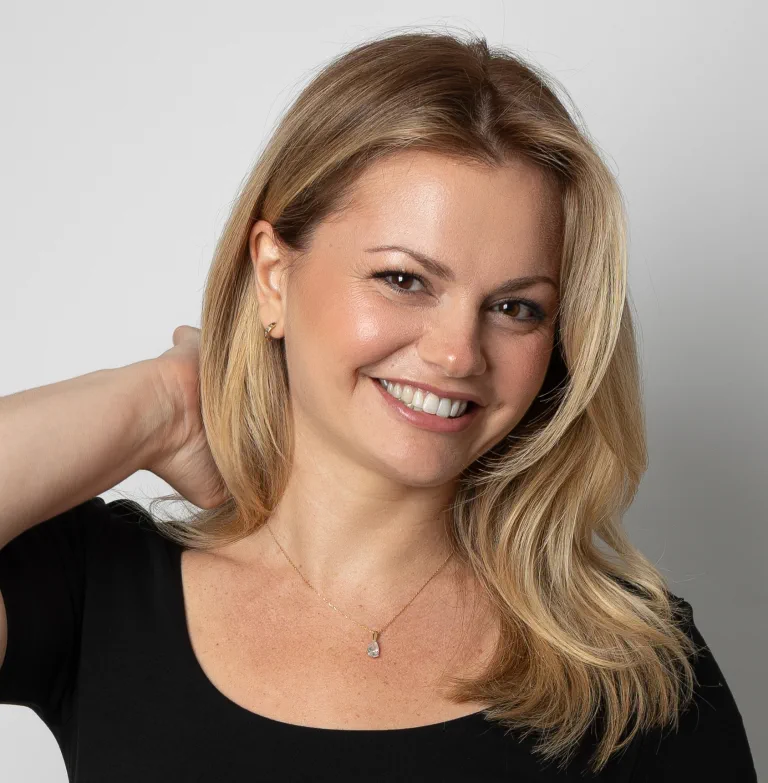
Verónica López Wallis styling a bride’s hair during the preparation

By submitting this form, your details are processed in line with the privacy policy.

Makeup and hair are never planned apart: they are built together so the same face holds from the ceremony to the last dance.

By submitting this form, your details are processed in line with the privacy policy.

Contactwallisbridal